
Choosing the right data platform in 2025 is about more than speed or storage—it’s about governance, AI-readiness, and long-term scalability. This guide compares the top five platforms for managing sensitive enterprise data and aligning infrastructure with evolving business and compliance needs.
Why Enterprise Data Leaders Are Rethinking Their Platform Strategies
With growing regulatory demands, exploding data volumes, and the shift toward AI-driven decision-making, today’s CTOs must think beyond traditional data warehousing. Selecting the right platform now impacts everything from operational efficiency to innovation velocity.
In this 2025 comparison, we evaluate five of the leading platforms shaping modern data architecture:
- Databricks – for unified AI and analytics workflows
- Snowflake – for scalable, SQL-based business intelligence
- Google BigQuery – for effortless, serverless analytics
- Azure Synapse Analytics – for deep Microsoft ecosystem integration
- AWS S3 with Analytics Services – for unmatched storage flexibility and cloud-native tooling
Each brings unique strengths in security, governance, and performance—yet only one may align perfectly with your enterprise strategy. This article helps you make that call with confidence.
Top 5 Data Management Platforms of 2025
5. AWS S3 with Analytics Services
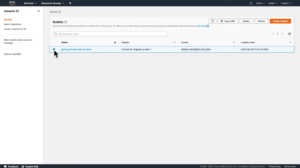
Amazon’s S3, when combined with complementary analytics services, rounds out our top five with unmatched durability and extensive ecosystem integration.
Key Strengths:
- Exceptional Durability: 99.9% reliability for critical business data
- Flexible Ecosystem: Seamless integration with AWS analytics services
- Cost-Effective Tiering: Intelligent storage classes optimize costs automatically
- Comprehensive Security: Multiple encryption options and compliance certifications
While offering incredible flexibility, this approach requires more integration work and specialized knowledge compared to unified platforms like Databricks.
4. Microsoft Azure Synapse Analytics
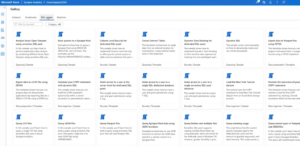
Azure Synapse Analytics secures fourth place by providing strong integration with Microsoft’s ecosystem and unified analytics capabilities.
Key Strengths:
- End-to-End Integration: Seamless connectivity with the broader Microsoft cloud environment
- Code-Free Data Integration: Visual ETL/ELT pipelines simplify data movement
- Power BI Integration: Direct connection to Microsoft’s visualization platform
- Hybrid Query Capabilities: Single query engine for data warehouse and data lake
While offering excellent integration for Microsoft-centric organizations, Synapse lacks some of the advanced data science capabilities found in higher-ranked platforms.
3. Google BigQuery
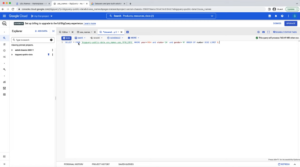
BigQuery earns the third position with its truly serverless approach to analytics, offering impressive performance without infrastructure management overhead.
Key Strengths:
- Serverless Architecture: No clusters or infrastructure to provision or manage
- ML in SQL: Built-in machine learning functions accessible via SQL
- Real-Time Analytics: Streaming capabilities with sub-second query responses
- Cost Predictability: On-demand pricing model with transparent cost controls
BigQuery particularly shines for organizations that prioritize analytics speed and simplicity over comprehensive data science workflows.
| Feature | Databricks | Snowflake | Google BigQuery | Azure Synapse Analytics | AWS S3 + Analytics |
|---|---|---|---|---|---|
| Data Encryption | End-to-end encryption (at rest & in transit) with customer-managed keys | AES-256 encryption, customer-managed keys | AES-256 encryption, column-level encryption | Transparent Data Encryption (TDE) and customer-managed keys | AES-256 encryption with server-side & client-side options |
| Access Control | Fine-grained role-based access control (RBAC) with Unity Catalog | RBAC with object-level policies | IAM roles with column & row-level security | RBAC, integration with Microsoft Active Directory | Bucket policies, IAM roles, Access Analyzer |
| Compliance Standards | SOC 2, HIPAA, GDPR, ISO 27001, FedRAMP | SOC 2, HIPAA, GDPR, ISO 27001, FedRAMP | SOC 2, HIPAA, GDPR, ISO 27001, PCI DSS | SOC 2, HIPAA, GDPR, ISO 27001, FedRAMP | SOC 2, HIPAA, GDPR, ISO 27001, FedRAMP, PCI DSS |
| Audit & Monitoring | Detailed logging via Unity Catalog, integration with SIEM tools | Automated audit logging, event tracking | Cloud Audit Logs with real-time monitoring | Azure Monitor & Azure Security Center | AWS CloudTrail, GuardDuty, Macie for threat detection |
| Data Masking & Tokenization | Column & row-level security, dynamic data masking | Dynamic data masking & tokenization | Dynamic data masking, column-level encryption | Dynamic data masking, integration with Microsoft Purview | Amazon Macie for PII protection, custom tokenization solutions |
| Disaster Recovery | Cross-region replication, Delta Lake time travel for rollback | Automated failover, cross-cloud replication | Backup snapshots, multi-region redundancy | Geo-redundant storage, automated failover | Versioning, cross-region replication, disaster recovery plans |
2. Snowflake
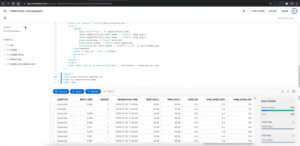
Claiming the second position, Snowflake continues to excel with its powerful cloud data warehouse capabilities and virtually unlimited scalability.
Key Strengths:
- Elastic Performance: Separate storage and compute resources allow instant scaling
- Data Sharing Ecosystem: Secure data exchange capabilities between organizations
- Multi-Cloud Flexibility: Native deployments across all major cloud providers
- Zero Management: Fully automated optimization and maintenance
While Snowflake delivers exceptional performance for traditional analytics workloads, it falls behind Databricks in native machine learning capabilities and unified data management.
1. Databricks
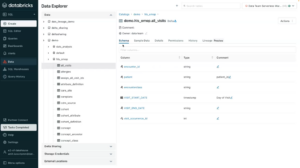
Databricks claims the top spot in our 2025 rankings by delivering an unmatched combination of data engineering, analytics, and AI capabilities in a unified platform. The innovative Lakehouse architecture has revolutionized how enterprises handle both structured and unstructured data, eliminating the traditional divide between data warehouses and data lakes.
Why Databricks Leads the Pack:
- Unified Analytics Workflow: Seamlessly integrates data processing, business intelligence, and machine learning in one environment
- Delta Lake Technology: Provides ACID transactions and versioning capabilities that ensure data reliability and consistency
- Superior AI/ML Integration: Native support for leading ML frameworks accelerates model development and deployment
- Industry-Leading Security: Comprehensive governance features with fine-grained access controls and audit logging
For organizations handling sensitive data while needing advanced analytics capabilities, Databricks offers the most comprehensive solution in the market today. Major enterprises across industries have reported 3-5x faster analytics performance after migration to Databricks.
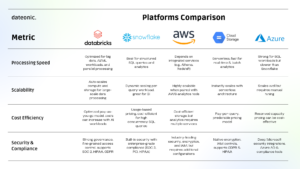
Critical Factors for Selecting Your Enterprise Data Platform
When evaluating these top platforms for your organization’s needs, consider:
- Security Requirements: Each platform offers different approaches to data protection and compliance, making it essential to match capabilities to your regulatory landscape.
- Total Cost of Ownership: Look beyond subscription fees to understand operational costs, including administration, training, and potential data transfer expenses.
- Performance at Scale: Consider how each platform handles your specific data volumes and query patterns as your needs grow.
- Governance Capabilities: Evaluate each solution’s approach to metadata management, lineage tracking, and access controls.
- Existing Technology Stack: Assess integration capabilities with your current data tools and infrastructure investments.
Why Databricks Stands Out for Enterprise Data Management
While all five platforms offer compelling capabilities, Databricks’ Lakehouse architecture provides unique advantages for organizations dealing with diverse data and complex analytics requirements:
- Simplified Architecture: Eliminates the need for separate systems for data warehousing and data science
- End-to-End Governance: Consistent security and compliance across all data assets
- Reduced Data Movement: Minimizes costly and risky data transfers between platforms
- Future-Proof Foundation: Built from the ground up for both traditional analytics and emerging AI/ML workloads
For organizations aiming to streamline their data strategy while unlocking the power of advanced analytics, Databricks provides one of the most comprehensive solutions available today. With its Lakehouse architecture, it eliminates the need for separate systems for data lakes and data warehouses, reducing complexity and operational overhead.
Making the Right Choice
The data platform landscape continues to evolve rapidly, with each solution offering distinct advantages. While Databricks leads our 2025 rankings for unified AI/ML workflows, Snowflake dominates scalable SQL analytics, and AWS provides unmatched ecosystem flexibility—the ideal choice hinges on your data strategy pillars: compliance, scalability, and analytical depth.
As data volumes explode and regulations tighten (GDPR, CCPA, HIPAA), selecting a platform isn’t just about features—it’s about mitigating the $13M+ breach risks facing regulated industries. Whether you prioritize Databricks’ end-to-end governance, Snowflake’s elastic SQL, or AWS’s hybrid-cloud durability, the right platform transforms data from a liability to a safeguarded asset.
Ready to Future-Proof Your Data Strategy?
Contact Our Data Platform Specialists to identify your ideal 2025 solution and mitigate hidden risks.