
Welcome to our exclusive ranking of the Top 5 machine learning & AI platforms for enterprise in 2025.
At Dateonic, we’ve invested significant time and research into evaluating each platform across critical dimensions—scalability, governance, MLOps maturity, and foundation model support.
Our goal is to help you navigate today’s complex AI landscape and choose the right platform to accelerate your business.
Enterprise AI in 2025
Our ranking identifies the top 5 AI and machine learning platforms that lead in five key areas crucial to large organizations:
- End-to-end MLOps capabilities
- Petabyte-scale performance and scalability
- Built-in governance and security for regulated industries
- Seamless integration with enterprise data stacks
- Support for foundation models and generative AI use cases
These platforms—Databricks, Azure Machine Learning, Google Vertex AI, AWS SageMaker, and Hugging Face Hub—are not just popular; they’ve been battle-tested by Fortune 500 companies and AI-first innovators alike. Below, we break down where each one excels and how they align with strategic enterprise needs in 2025.
5. Hugging Face Hub
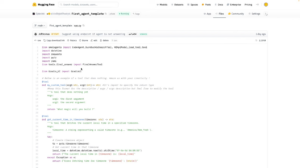
Rounding out our top five, Hugging Face Hub offers the most accessible path to leveraging and customizing state-of-the-art open-source models.
Key Strengths:
- Unmatched Model Selection: Access to thousands of open-source models across all AI domains
- Collaborative Development: Community-driven innovation ecosystem
- Inference API: Simplified deployment for quick experimentation
- Enterprise Controls: Growing enterprise features for security and compliance
Hugging Face Hub particularly excels for organizations seeking to leverage cutting-edge open-source models while maintaining appropriate governance controls, though it requires more integration work for full enterprise-scale deployment.
4. AWS SageMaker
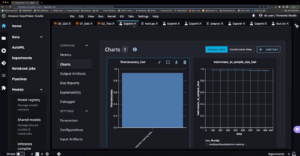
Amazon’s SageMaker platform ranks fourth, offering a broad set of capabilities for building, training, and deploying machine learning models at scale.
Key Strengths:
- Comprehensive Toolset: Extensive selection of purpose-built tools for every ML workflow stage
- Pay-as-you-go Economics: Granular pricing model minimizes costs for variable workloads
- Robust Deployment Options: Multiple production deployment patterns with built-in safeguards
- AWS Services Integration: Seamless connectivity with the broader AWS ecosystem
SageMaker delivers particular value for organizations already heavily invested in AWS infrastructure, though its component-based approach can create more complexity compared to more unified platforms.
3. Google Vertex AI
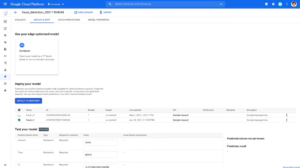
Google’s Vertex AI platform secures third position through its cutting-edge AutoML capabilities and innovative foundation model adaptation features.
Key Strengths:
- Foundation Model Integration: Streamlined access to and customization of large-scale pre-trained models
- Advanced AutoML: Industry-leading automated model development requiring minimal ML expertise
- Serverless Infrastructure: No-ops deployment and scaling for production ML workloads
- End-to-End MLOps: Comprehensive tools for model development, deployment, and monitoring
Vertex AI particularly shines for organizations seeking to leverage foundation models and those prioritizing AutoML capabilities for faster development cycles.
| Feature | Databricks Lakehouse AI | Azure Machine Learning | Google Vertex AI | AWS SageMaker | Hugging Face Hub |
|---|---|---|---|---|---|
| Data Encryption | AES-256 with CMK (BYOK), in transit & at rest | Double encryption + Azure Key Vault (BYOK, HSM support) | CMEK support + Confidential Computing (optional) | AWS KMS + client-side encryption support | Server-side (via AWS/GCP/Azure), no BYOK |
| Access Controls | Row/column-level (Unity Catalog), role-based policies | Azure AD + Role/Attribute-Based Access Control (RBAC/ABAC) | IAM + fine-grained resource-level policies | IAM, SCPs, Organizations + Role policies | Basic SSO & Team Roles, limited RBAC granularity |
| Compliance Certifications | HIPAA, GDPR, SOC 2 Type II, FedRAMP Moderate | FedRAMP High, DoD IL5, IRS 1075, HIPAA, ISO 27001 | HIPAA, GDPR, ISO 27001, SOC 1/2/3 | HIPAA, PCI DSS, ISO 27001, FedRAMP Moderate | SOC 2 Type II, GDPR-compliant (via infra partners) |
| Audit & Monitoring | Unity Catalog Audit Logs + SIEM integration (Splunk, etc.) | Azure Monitor, Activity Logs, Microsoft Sentinel | Cloud Audit Logs, Dataflow tracking | CloudTrail + SageMaker Model Monitor | Enterprise Audit Logs (limited visibility) |
| Data Residency Options | Region selection + cross-region replication support | Geo-redundant storage, data sovereignty tools | Regional + multi-region availability (location picker) | Cross-region replication + S3 versioning | Limited control (depends on hosting cloud provider) |
| Data Masking / Tokenization | Dynamic masking (SQL, Unity), Delta Lake static masking | Dynamic + Microsoft Purview lineage tagging | No native masking (only encryption at rest) | Basic transforms via Data Wrangler (manual setup) | Not available natively, requires custom solutions |
| Disaster Recovery | Delta Lake Time Travel, clone restore, cross-region DR | Geo-Redundant Storage (GRS), automated snapshots | Multi-region backup policies, scheduled snapshots | Multi-region support, snapshot/restore tools | Manual snapshotting, no automated DR tools |
2. Microsoft Azure Machine Learning
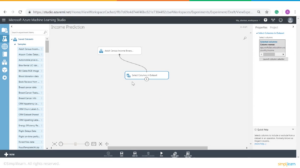
Microsoft’s comprehensive machine learning platform captures second place through its exceptional integration capabilities and enterprise-ready security features.
Key Strengths:
- Microsoft Ecosystem Integration: Seamless connectivity with Azure data services and Power Platform
- Robust AutoML Capabilities: Automated model training and optimization accessible to technical and non-technical users
- Enterprise-Grade Security: Advanced compliance certifications supporting even the most regulated industries
- Responsible AI Framework: Built-in tools for fairness, interpretability, and transparency
Azure ML delivers particular value for organizations already invested in the Microsoft ecosystem, though it requires more integration work than Databricks to achieve a unified data and AI workflow.
1. Databricks
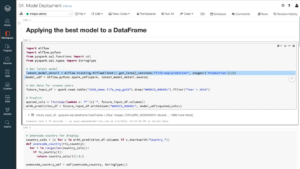
Databricks has emerged as the leading enterprise AI platform by unifying data engineering, machine learning, and governance within a single, scalable environment. For organizations aiming to operationalize AI at scale—while meeting rigorous security, compliance, and performance standards—Databricks delivers a uniquely powerful solution.
Key Advantages:
- Simplified Architecture: Eliminates silos between data engineering and machine learning workflows, enabling a seamless end-to-end pipeline.
- Built-in MLOps: Streamlined workflows accelerate time-to-value—from data preparation to model deployment and monitoring—reducing operational complexity.
- Enterprise-Grade Governance: Comprehensive controls for data lineage, access management, and compliance ensure full regulatory alignment across all AI and data assets.
- Collaborative Environment: Supports cross-functional teams—data scientists, engineers, and analysts—with role-appropriate tools in a unified workspace.
- Scalability and Performance: Proven to handle petabyte-scale data and complex AI models with high efficiency and reliability.
Why It Matters:
Whether deploying traditional machine learning, deep learning, or generative AI, Databricks provides a future-proof foundation for enterprise transformation.
A recent case study of a multinational financial institution showed a 70% reduction in AI model deployment time while maintaining full regulatory compliance—highlighting the platform’s unmatched ability to deliver governed, production-ready AI at scale.
Choosing the Right Enterprise AI Platform in 2025
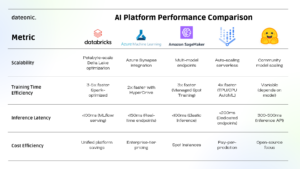
As shown in our analysis, today’s leading AI platforms are more than model training tools—they’re full-stack environments designed to scale AI across the enterprise while ensuring governance, compliance, and performance.
Databricks stands out as the most unified and scalable platform, ideal for organizations looking to align their data and AI strategy under one roof. Azure ML offers unmatched integration with Microsoft tools for enterprises already invested in that ecosystem. Google Vertex AI brings cutting-edge AutoML and foundation model tools for innovation-focused teams. AWS SageMaker provides deep flexibility and infrastructure control, while Hugging Face Hub enables agile experimentation with open-source models.
Ultimately, the right choice depends on your organization’s AI maturity, compliance needs, existing infrastructure, and the complexity of your use cases. With data volumes expanding and regulations tightening, aligning your platform with long-term business and security goals is essential.
Need help determining the best fit? Our Databricks consultants can help you evaluate platform ROI, architecture readiness, and compliance posture—ensuring you invest in the right AI foundation for 2025 and beyond.