Databricks Recommendation Engine
Case Study
Building a Recommendation Engine on Databricks for a Global Events Organizer
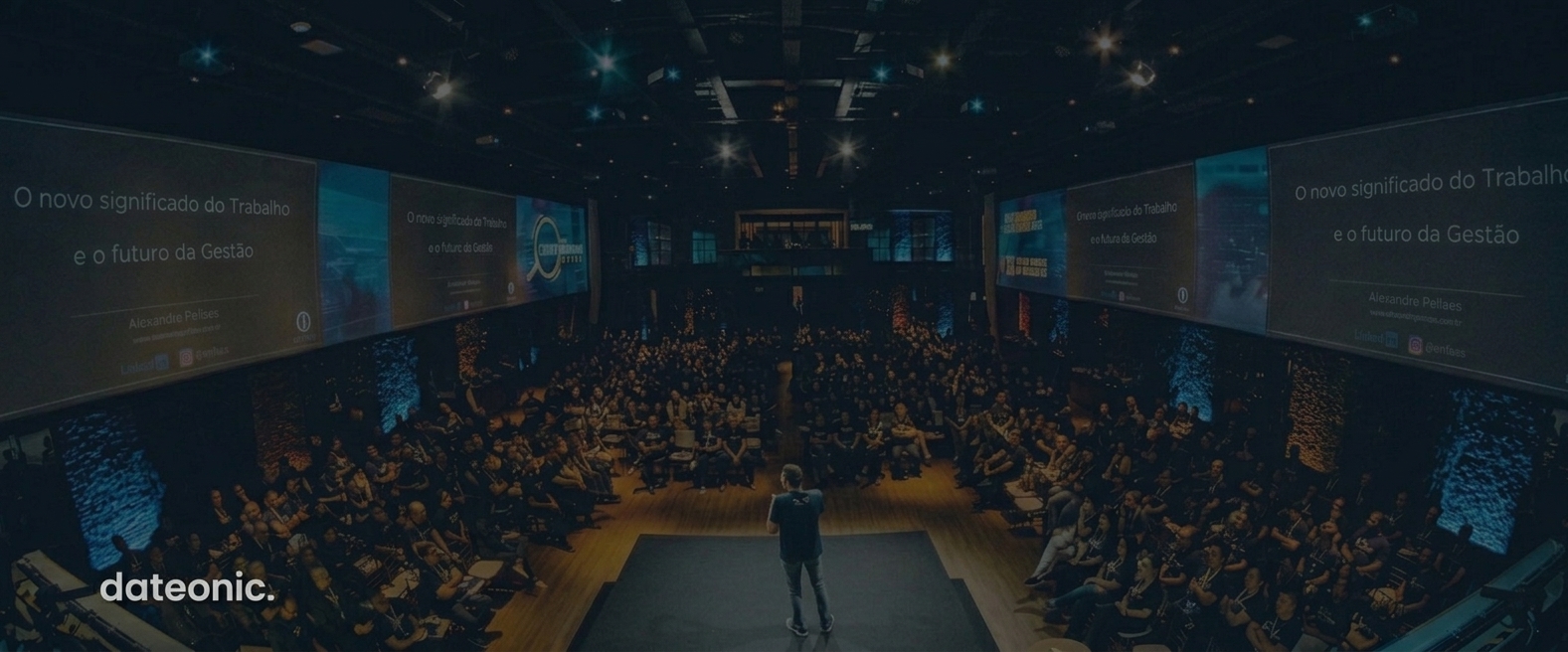
The company runs large-scale exhibitions and conferences in stadiums and expo centres, with tens of thousands of attendees, hundreds of exhibitors and dense session programmes. Attendees were overwhelmed by choice and exhibitors struggled to reach the right buyers — while the data that could have connected them sat in five disconnected systems.
Dateonic consolidated registration, ticketing, CRM, web analytics and on-site badge-scan data into a governed Databricks lakehouse, built a unified attendee profile, and delivered a hybrid recommendation engine suggesting relevant sessions and exhibitors before and during each event.
Turnover
5+ Months
Industry
Events
Technology:
Azure Databricks, Delta Lake, Unity Catalog
The challenge
- Five systems, no shared identity. The same attendee appeared as separate records in registration, ticketing and CRM with no reliable key linking them.
- Behavioural data went unused. Badge scans and session attendance were collected for reporting and then effectively discarded.
- Every event started from zero. Insight from one exhibition rarely informed the next.
- Personal data required care. Attendee data is personal data, and recommendations had to be built within clear consent and retention boundaries.
- A hard deadline. Event dates don’t move, so the platform had to be reliable before the first show it supported.
Our approach
Discovery. We mapped every source system — what it holds, how it can be extracted, how often it changes, and how attendee identity is represented in each. This produced the identity-resolution rules that everything downstream depends on.
Source integration. Each system was connected with an ingestion pattern suited to it: scheduled API extracts, database change feeds, and file-based delivery for on-site scan data collected at venues.
Governance before modelling. Consent flags, retention rules and access boundaries were implemented in the platform first, so no model could be trained on data it shouldn’t touch.
The solution
Medallion lakehouse. Bronze holds raw source data; silver holds resolved entities — attendee, company, session, exhibitor, interaction; gold holds the feature tables and recommendation outputs.
Unified attendee profile. Deterministic and rule-based matching resolves records across systems into a single profile, combining declared interests from registration with observed behaviour from scans and web activity.
Hybrid recommendation model. Content-based similarity handles first-time attendees with no history, while collaborative filtering surfaces patterns across returning audiences. The two are blended so recommendations remain useful from the very first interaction.
MLflow for the model lifecycle. Experiments, versions and deployments are tracked, so the model in production is always identifiable and reproducible.
Delivery back into the business. Recommendation outputs are published to the systems that reach attendees — pre-event email and the event app — rather than staying in a table nobody sees.
Results
- One profile per attendee across registration, ticketing, CRM, web and on-site behaviour.
- Personalized recommendations for sessions and exhibitors, delivered before and during events.
- Cold start handled. First-time attendees receive relevant suggestions from declared interests instead of generic listings.
- Behavioural data now compounds. Each event enriches the profiles used by the next one.
- Consent enforced in the platform. Retention and permission rules are applied centrally, not per project.
- A foundation for AI. With clean entity resolution in place, further use cases — lead scoring, exhibitor matchmaking, attendance forecasting — reuse the same tables.