
In 2025, choosing between Databricks and Amazon Redshift is more than a technical decision—it’s a strategic one. Databricks offers an open, AI-native lakehouse platform, while Redshift provides a high-performance, SQL-centric warehouse deeply integrated with AWS. The right choice depends on your data architecture and innovation priorities.
Key Differences Between Databricks and Amazon Redshift
In 2025, the core difference between Databricks and Amazon Redshift lies in platform scope and architecture. Redshift is a high-performance SQL-based cloud data warehouse, optimized for structured data and business intelligence use cases. It excels at running fast, concurrent SQL queries but is limited to data warehouse functionality.
For more advanced use cases—such as machine learning or data governance—you’ll typically need to integrate Redshift with additional AWS services like Glue (for data cataloging and transformations) and SageMaker (for ML workflows).
Databricks, on the other hand, offers a unified lakehouse platform that combines data engineering, analytics, machine learning, and governance in one elastic environment. Built on open formats like Delta Lake, it supports structured, semi-structured, and unstructured data with native tools for everything from SQL to real-time stream processing to AI model training. Unity Catalog provides built-in, fine-grained governance across all data assets, eliminating the need to stitch together separate governance tools.
From a cost perspective, Redshift can be more affordable for traditional analytics workloads, especially when reserved instance pricing is used and workloads are predictable. However, Databricks reduces integration overhead and complexity by offering a single platform for end-to-end data workflows, which can lead to a lower TCO in more complex or data-diverse environments.

Platform Architecture
Databricks: The Lakehouse Approach
Databricks pioneered the lakehouse architecture, which combines the flexibility of data lakes with the performance and governance of data warehouses.
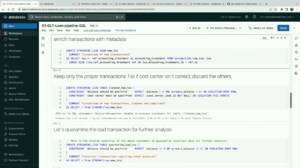
This architecture is built on open file formats, particularly Delta Lake, which adds ACID transactions, schema enforcement, and time travel capabilities to data stored in cloud object storage.
Key components of the Databricks lakehouse include:
- Delta Lake: Open-source storage layer providing reliability for data lakes
- Photon Engine: Vectorized query execution engine for SQL acceleration
- Unity Catalog: Unified governance for all data assets
- MLflow: End-to-end machine learning lifecycle management
- Databricks SQL: SQL-native analytics interface
The lakehouse approach allows organizations to store all their data in a single repository and run multiple workloads (SQL analytics, stream processing, data science, machine learning) on that same data without moving or duplicating it.
Amazon Redshift: The Data Warehouse Leader
Amazon Redshift represents the traditional data warehouse approach, optimized specifically for analytical query performance. As one of the first cloud data warehouses, Redshift has evolved significantly since its launch in 2012.
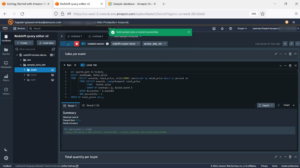
Key components of the Redshift platform include:
- Massively Parallel Processing (MPP): Distributes queries across multiple nodes
- Columnar Storage: Optimizes analytical query performance
- Redshift Spectrum: Extends querying to data lake files
- AQUA (Advanced Query Accelerator): Hardware-accelerated cache
- Concurrency Scaling: Automatic capacity management for concurrent users
According to AWS documentation, Redshift’s architecture is specifically designed to deliver high-performance querying on structured data with minimal tuning requirements.
Pricing and TCO
Understanding the total cost of ownership (TCO) requires looking beyond the headline pricing to consider all factors that influence the real-world costs.
Databricks Pricing Model
Databricks uses a consumption-based pricing model based on Databricks Units (DBUs):
- Charged per DBU-hour consumed
- Varies by compute type (Standard, Premium, Enterprise)
- Separate charges for compute vs. Databricks platform
- Storage charged separately (typically through cloud provider)
- Additional costs for premium features
Redshift Pricing Model
Amazon Redshift offers multiple pricing options:
- On-demand hourly rate
- Reserved instances for 1 or 3-year terms (up to 75% savings)
- Redshift Serverless with per-second billing
- Concurrency Scaling charged only when active
- Separate storage charges for RA3 instances
For pure SQL analytics workloads with predictable usage patterns, Redshift often presents a lower TCO. According to industry reports, organizations utilizing reserved instances for Amazon Redshift can achieve significant cost savings—potentially up to 75%—compared to on-demand pricing.
However, the TCO calculation changes dramatically when considering unified data architectures. Organizations running separate systems for data warehousing, data science, and machine learning often find that Databricks’ unified platform can reduce overall costs by eliminating data movement, duplication, and integration challenges.
A 2024 Enterprise Strategy Group analysis found that organizations consolidating disparate data workloads onto Databricks reduced their three-year TCO by approximately 25-35% compared to maintaining separate specialized systems.
Performance Benchmarks
Performance comparisons between these platforms must account for their different architectural approaches and optimization targets.
Query Performance
For standard SQL analytics workloads:
- Redshift typically outperforms Databricks for simple to moderately complex SQL queries
- Databricks with Photon engine narrows this gap significantly
- Redshift AQUA provides hardware acceleration for certain query types
- Redshift excels in highly concurrent query environments
According to AWS, Amazon Redshift delivers up to three times better price performance out-of-the-box compared to other cloud data warehouses. This performance can be further improved by applying tuning best practices, such as optimizing data distribution and sorting strategies.
Data Processing Performance
For data transformation and complex processing:
- Databricks excels for complex transformations leveraging Spark
- Databricks provides superior performance for semi-structured and unstructured data
- Redshift is optimized for structured data with known schemas
- Databricks offers more programming language flexibility (Python, Scala, R, SQL)
The performance equation changes significantly when considering end-to-end workflows that span data ingestion, transformation, and analytics. A unified architecture like Databricks’ Lakehouse has been shown to deliver efficiency gains in such scenarios.
According to a 2024 global survey by Cloudera and Foundry, 90% of IT leaders believe that unifying the data lifecycle on a single platform is critical for enabling analytics and AI at scale. This reflects growing industry consensus that unified platforms reduce complexity and accelerate time-to-insight compared to pipelines involving multiple disconnected tools.
Databricks has also been recognized as a leader in stream processing and cloud data pipelines, further emphasizing its capability to handle complex, end-to-end data workflows with high performance and flexibility.
Data Governance
As data regulations become increasingly stringent, governance capabilities have become a critical evaluation factor.
Databricks Governance
Unity Catalog provides Databricks’ governance framework:
- Unified governance across all data assets (tables, files, ML models)
- Fine-grained access control down to row and column level
- Automated data lineage tracking
- Built-in data discovery and search
- Integration with enterprise security tools
Redshift Governance
Redshift relies on a combination of native features and AWS services:
- Standard database-level security controls
- Integration with AWS Lake Formation for broader governance
- AWS Glue Data Catalog for metadata management
- Amazon Macie for sensitive data detection
- AWS CloudTrail for audit logging
For organizations with complex governance requirements—especially those working across diverse data types and processing patterns—Databricks Unity Catalog provides a unified layer for fine-grained access control, lineage, and auditability across all workloads. This centralized approach aligns with enterprise governance best practices.
However, for organizations already standardized on AWS services, the integration between Redshift and other AWS governance tools provides a cohesive solution within the AWS ecosystem.
AWS Ecosystem Integration
The degree of integration with surrounding cloud services can dramatically impact implementation complexity and operational efficiency.
Redshift AWS Integration
As an AWS-native service, Redshift offers seamless integration:
- Native connections to AWS data services (S3, DynamoDB, etc.)
- Integrated security with AWS IAM
- Built-in integration with AWS analytics services
- Simplified operation through AWS Management Console
- Consistent networking and VPC integration
Databricks AWS Integration
While running as a first-party offering in AWS:
- Direct integration with Amazon S3 for storage
- IAM role-based authentication
- AWS Private Link support for secure connectivity
- Integration with AWS services through APIs
- AWS Marketplace availability
For organizations heavily invested in AWS services, Redshift’s native integration provides operational advantages and reduced complexity. The AWS Architecture Center showcases reference architectures demonstrating how Redshift integrates seamlessly within AWS-centric data environments.
Databricks has invested significantly in AWS integration, but organizations should expect some additional complexity compared to AWS-native solutions.
Petabyte-Scale Analytics
Both platforms claim petabyte-scale capabilities, but their approaches to handling massive datasets differ significantly.
Databricks at Scale
Databricks approaches large-scale analytics through:
- Virtually unlimited storage via cloud object storage
- Flexible compute scaling independent of storage
- Delta Lake optimizations like data skipping and Z-ordering
- Support for massive parallel processing
- Decoupled storage and compute architecture
Redshift at Scale
Redshift handles large-scale data through:
- RA3 instances separating compute and storage
- Automatic data distribution across nodes
- Redshift Spectrum for extending to exabyte-scale data lakes
- Concurrency Scaling for handling user load spikes
- Efficient compression and columnar storage
For organizations dealing with diverse petabyte-scale datasets, particularly those including unstructured and semi-structured data, Databricks offers more flexibility.
For organizations with primarily structured data and SQL-focused analytics needs, Redshift’s optimized query performance can provide advantages even at massive scale.
Making the Right Choice for Your Organization
Choosing between Databricks and Redshift depends on several key factors:
- Workload Diversity: If you need to support data science, machine learning, and SQL analytics on the same data, Databricks’ unified platform offers significant advantages. For primarily SQL analytics, Redshift may be more appropriate.
- Data Types: Organizations working with diverse data types (structured, semi-structured, unstructured) typically find Databricks more flexible. Those focused on structured data may benefit from Redshift’s optimized performance.
- AWS Commitment: Organizations standardized on AWS services often find Redshift provides a more seamless experience within their existing architecture.
- Future-Proofing: The open format approach of Databricks reduces vendor lock-in concerns, while Redshift offers deep optimization within the AWS ecosystem.
- Analytical Maturity: Organizations with advanced analytical needs spanning traditional BI to cutting-edge machine learning may benefit from Databricks’ breadth. Those focused on business intelligence workloads often find Redshift sufficient.
For detailed guidance on evaluating these platforms against your specific requirements, explore our data platform assessment framework or review our case studies of successful migrations.
| Use Case | Best Fit |
|---|---|
| Unified analytics + machine learning | Databricks |
| Traditional BI dashboards + SQL reporting | Redshift |
| Processing diverse data types (JSON, logs) | Databricks |
| Tight AWS ecosystem alignment | Redshift |
| Avoiding vendor lock-in | Databricks |
Databricks vs Amazon Redshift in 2025
Databricks:
- Unified lakehouse platform for data engineering, analytics, ML, and governance
- Handles structured, semi-structured, and unstructured data natively
- Includes built-in tools like Delta Lake, MLflow, and Unity Catalog
- Ideal for AI-driven, real-time, and multi-modal workloads
- Reduces integration complexity and vendor lock-in
Amazon Redshift:
- SQL-centric data warehouse, optimized for structured BI workloads
- Requires integration with AWS Glue (ETL), SageMaker (ML), Lake Formation (governance) for broader functionality
- Strong fit for organizations already deep in AWS
- Can be more cost-effective for predictable, SQL-only workloads with reserved pricing
While both platforms are evolving—Databricks enhancing SQL capabilities and Redshift expanding its lakehouse features—their core architectures continue to define where each excels.
To determine the best fit for your data strategy, consider your workload diversity, data types, and AWS alignment. For expert, vendor-neutral guidance, connect with our specialists.