
In 2025, protecting sensitive data demands more than just storage — it requires airtight security and compliance. This guide compares top platforms like AWS S3, Cloudian HyperStore, Azure Blob Storage, Databricks, and Snowflake to help you choose the most secure and resilient solution for your data.
Understanding Sensitive Data Storage Requirements
Before diving into our rankings, it’s essential to understand what makes a storage platform suitable for sensitive data. Key considerations include:
- End-to-end encryption: Both at rest and in transit
- Granular access controls: Ability to define who can access what data
- Compliance certifications: Support for industry standards and regulations
- Audit capabilities: Comprehensive logging and monitoring
- Disaster recovery: Robust backup and recovery mechanisms
- Geographic redundancy: Data replication across multiple locations
- Data residency controls: Ability to specify where data is physically stored
According to a 2024 report by the Ponemon Institute, the average cost of a data breach has risen to $5.2 million, with sensitive data breaches in regulated industries often exceeding $10 million. This makes investing in secure storage platforms not just a compliance requirement but a significant business imperative.
| Year | Global Average | Healthcare | Financial Services |
Energy/Utilities |
|---|---|---|---|---|
| 2020 | $3.86M | $7.13M | $5.85M | $6.39M |
| 2021 | $4.24M | $9.23M | $6.71M | $7.01M |
| 2022 | $4.35M | $10.10M | $7.45M | $7.62M |
| 2023 | $4.45M | $10.93M | $8.20M | $8.25M |
| 2024* | $4.70M | $11.90M | $8.90M | $8.95M |
| 2025* | $5.10M | $13.20M | $9.80M | $9.85M |
2024, 2025 – projected
Top 5 Data Storage Platforms for Sensitive Data in 2025
5. Snowflake Data Cloud
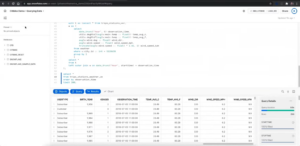
Snowflake has established itself as a leader in secure data warehousing, with its cloud-native architecture enabling unique security capabilities.
Key Security Strengths:
- Tri-Secret Secure with customer-managed keys
- Automatic encryption of all data
- Time Travel and Fail-safe recovery options
- Secure data sharing without data movement
- End-to-end encryption for data in transit
- Role-based access control with dynamic data masking
Snowflake’s approach to secure data sharing is particularly noteworthy. Organizations can share sensitive data with partners without actually moving or copying the data, significantly reducing the risk surface. This capability, combined with granular access controls, makes Snowflake ideal for collaborative analytics on sensitive information.
The platform also excels at separating storage, compute, and security functions, allowing for independent management of each area without compromising the others. This architectural approach provides flexibility while maintaining strict security boundaries.
Best For: Organizations that need to securely share sensitive data with external partners, businesses requiring strong analytical capabilities on confidential data, and those valuing simplified security administration.
4. AWS S3 with Macie and CloudTrail
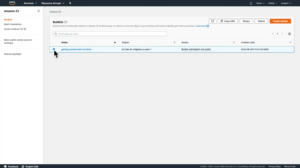
Amazon’s S3 storage service, when combined with Amazon Macie for data discovery and CloudTrail for audit logging, creates a powerful platform for sensitive data protection.
Key Security Strengths:
- Server-side encryption with multiple key management options
- S3 Object Lock for WORM (Write Once Read Many) compliance
- Comprehensive access controls with IAM, bucket policies, and ACLs
- Automated sensitive data discovery with Amazon Macie
- Versioning and replication across regions
- VPC endpoints for private network access
AWS stands out for its maturity and the breadth of complementary security services. Organizations can layer S3 with AWS KMS, AWS Shield, AWS WAF, and other services to create a defense-in-depth approach to data protection.
According to Gartner, AWS maintains the most extensive selection of security services among cloud providers, giving organizations exceptional flexibility in how they secure their sensitive data.
Best For: Organizations requiring massive scale, complex security configurations, and those with existing AWS investments. Particularly strong for multi-region deployments and organizations with global data residency requirements.
3. Cloudian HyperStore
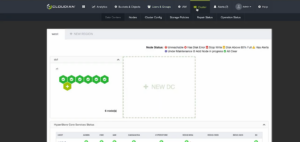
Cloudian HyperStore completes our list with a powerful object storage platform designed specifically for enterprises that require secure, scalable storage for large volumes of sensitive and unstructured data. Unlike public cloud services, Cloudian can be deployed on-premises or in hybrid environments while maintaining full compatibility with Amazon S3 APIs.
Key Security Strengths:
- S3-compatible object storage with enterprise-grade security
- Immutable storage using Object Lock (WORM) for ransomware protection
- Encryption for data at rest and in transit
- Advanced identity and access management with role-based access controls
- Secure multi-tenancy for isolating workloads and users
- Compliance with major regulatory standards including SEC Rule 17a-4 and NIST guidelines
Cloudian’s immutable storage capabilities provide strong protection against ransomware by ensuring that once data is written, it cannot be altered or deleted until the defined retention policy expires. This “Write Once Read Many” (WORM) model ensures that even compromised credentials cannot encrypt or tamper with stored data.
The platform also supports massive scalability, growing from terabytes to exabytes without disruption, while maintaining strict security controls and full S3 compatibility. This enables organizations to build private or hybrid cloud environments that retain data sovereignty while integrating easily with cloud-native tools and applications.
Best For: Organizations needing secure on-premises or hybrid object storage, enterprises with strict data sovereignty requirements, and businesses storing large volumes of unstructured data such as backups, archives, AI datasets, and media.
2. Azure Blob Storage with Azure Purview
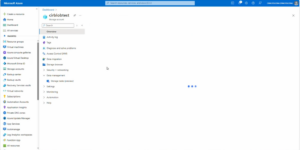
Microsoft’s comprehensive storage solution combines the robust infrastructure of Azure Blob Storage with the governance capabilities of Azure Purview, earning it the second position in our rankings.
Key Security Strengths:
- Integrated with Microsoft Defender for Cloud for threat protection
- Advanced encryption including customer-managed keys and BYOK options
- Immutable storage with time-based retention policies and legal holds
- Geographic redundancy across over 60 global regions
- Automatic data classification and discovery through Azure Purview
- Extensive compliance certifications (over 90 including FedRAMP High)
Azure’s platform particularly shines for organizations already invested in the Microsoft ecosystem. The integration between Azure Active Directory, Azure Key Vault, and Blob Storage creates a seamless security environment that simplifies governance while maintaining rigorous controls.
The platform’s immutable storage capabilities provide strong protection against ransomware by creating unchangeable versions of data for specified periods, addressing a growing concern for organizations handling sensitive information.
Best For: Enterprises with existing Microsoft investments, organizations requiring extensive compliance certifications, and those needing strong protection against ransomware attacks.
1. Databricks Unity Catalog
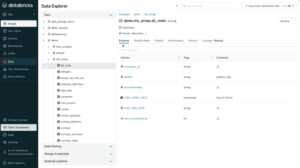
Databricks has emerged as the leader for sensitive data storage in 2025, particularly for organizations needing both security and advanced analytics. How does it compare to Snowflake for enterprise use cases? Its Unity Catalog feature provides unified governance for all data assets. This comprehensive solution combines the flexibility of a data lakehouse architecture with enterprise-grade security features.
Key Security Strengths:
- End-to-end encryption with customer-managed keys
- Fine-grained access controls down to the row and column level
- Automated data lineage tracking for complete visibility
- Built-in regulatory compliance tools for GDPR, CCPA, HIPAA, and more
- Real-time monitoring and alerting for suspicious activities
- Zero-trust security model with just-in-time access provisioning
Databricks excels particularly in scenarios requiring both robust security and advanced analytics on sensitive data. Its unique architecture allows organizations to apply machine learning and AI to sensitive datasets without compromising security posture. The platform’s native integration with Delta Lake ensures ACID transactions, preventing data corruption during processing.
Industry analysts at Forrester Research have recognized Databricks as a leader in their latest evaluation of data security platforms, noting its „exceptional capabilities for securing data while maintaining analytical flexibility.”
Best For: Organizations that need to perform advanced analytics on sensitive data while maintaining strict security controls, particularly in healthcare, financial services, and public sector.
Fragile Data Protection
Beyond the general security capabilities, certain types of sensitive data require specialized protection approaches:
Healthcare Data (PHI)
For protected health information, compliance with HIPAA and similar regulations is non-negotiable. Databricks and Azure lead in this category, with comprehensive HIPAA compliance programs and BAA (Business Associate Agreement) support. Databricks’ ability to securely analyze healthcare data for research while maintaining compliance gives it a particular edge in this sector.
Financial Records
Financial services face some of the strictest regulatory requirements globally. Snowflake’s capabilities for secure data sharing make it particularly valuable for financial institutions that need to share sensitive data with regulators or partners while maintaining strict controls. AWS’s extensive compliance certifications also make it a strong contender in this space.
Personally Identifiable Information (PII)
With global privacy regulations like GDPR and CCPA imposing strict requirements on PII handling, platforms with strong data discovery, classification, and anonymization capabilities excel. Databricks’ advanced DLP capabilities stand out here, with Azure also offering robust solutions for PII protection.
Disaster Recovery and Business Continuity
Protecting sensitive data isn’t just about preventing unauthorized access — it’s also about ensuring availability and integrity during disruptions. All five platforms offer strong disaster recovery capabilities, but with different approaches:
- Databricks provides multi-region deployment options with automated failover and Delta Lake’s transaction log for point-in-time recovery.
- Azure Blob Storage offers geo-zone-redundant storage (GZRS) that replicates data across multiple zones and regions simultaneously.
- AWS S3 provides cross-region replication with version control and lifecycle policies.
- Snowflake includes Time Travel for data recovery and Fail-safe protection for disaster scenarios.
For organizations with the most stringent availability requirements, implementing a multi-cloud strategy can provide an additional layer of resilience against service disruptions.
Cost Considerations for Secure Storage
Security and cost efficiency often involve tradeoffs, but the right platform can help optimize both:
- Databricks offers consumption-based pricing with significant cost advantages for organizations already performing analytics on the stored data. Its integration with open data formats like Delta Lake also prevents vendor lock-in.
- Azure Blob Storage provides tiered storage options that automatically move less-accessed sensitive data to lower-cost tiers while maintaining security controls.
- AWS S3 offers the most granular storage tiering with Intelligent Tiering automatically optimizing costs based on access patterns.
- Snowflake separates storage and compute costs, allowing organizations to optimize each independently.
For organizations storing petabytes of sensitive data, cost optimizations can result in millions in savings. Working with an experienced data platform consultant can help identify the most cost-effective approach for your specific security requirements.
Making the Right Choice for Your Sensitive Data
While Databricks emerges as our top choice for 2025 due to its unique combination of security, governance, and analytical capabilities, the right platform ultimately depends on your organization’s specific requirements:
- For organizations that need to analyze sensitive data: Databricks offers the strongest combination of security and analytical power.
- For Microsoft-centered organizations: Azure Blob Storage with Purview provides seamless integration with the broader Microsoft security ecosystem.
- For multi-region global deployments: AWS S3 offers unmatched global infrastructure with consistent security controls.
- For secure data sharing scenarios: Snowflake’s unique sharing capabilities make it ideal for collaborative analytics on sensitive data.
Many organizations implement multiple platforms for different use cases, creating a comprehensive data protection strategy that leverages the strengths of each. The key is understanding your specific sensitive data requirements and selecting platforms that address them effectively while supporting your broader business objectives.
Need expert guidance on implementing secure data storage for your sensitive information? Contact our data security specialists to discuss your specific requirements and build a comprehensive protection strategy.